LKW WALTER is a private Austrian transport organisation that focuses on organising full truckload (FTL) road movements.
LKW Walter logistics also works in combined transport across Europe and beyond.
What LKW WALTER Does in European FTL Logistics
The company profile positions with a core focus on organising FTL transports rather than operating as a classic asset-heavy carrier.
Its core business is planning, coordinating, and managing door-to-door FTL shipments with strong process standards and customer communication.
Alongside road-only moves, it promotes combined transport options that link major European business centres through rail and short-sea connections.
Full truck load focus and operating model
FTL organisation include thousands of FTL loads organised daily and a high annual volume of full truck loads.
It frames its value as an end-to-end transport organisation, including planning, coordination, and structured execution standards.
Many “requirements” are communicated through carrier partnership rules, onboarding, and equipment standards for subcontracted transport partners.
Geographic scope and markets served
The company describes its service coverage as Europe-wide, with additional reach to regions such as Russia, Central Asia, the Middle East, and North Africa.
For combined transport specifically, it links important business centres through a large set of short-sea and rail routes across many countries.
For anyone evaluating routes as a driver or carrier, lanes can range from domestic and cross-border EU work to longer international corridors.
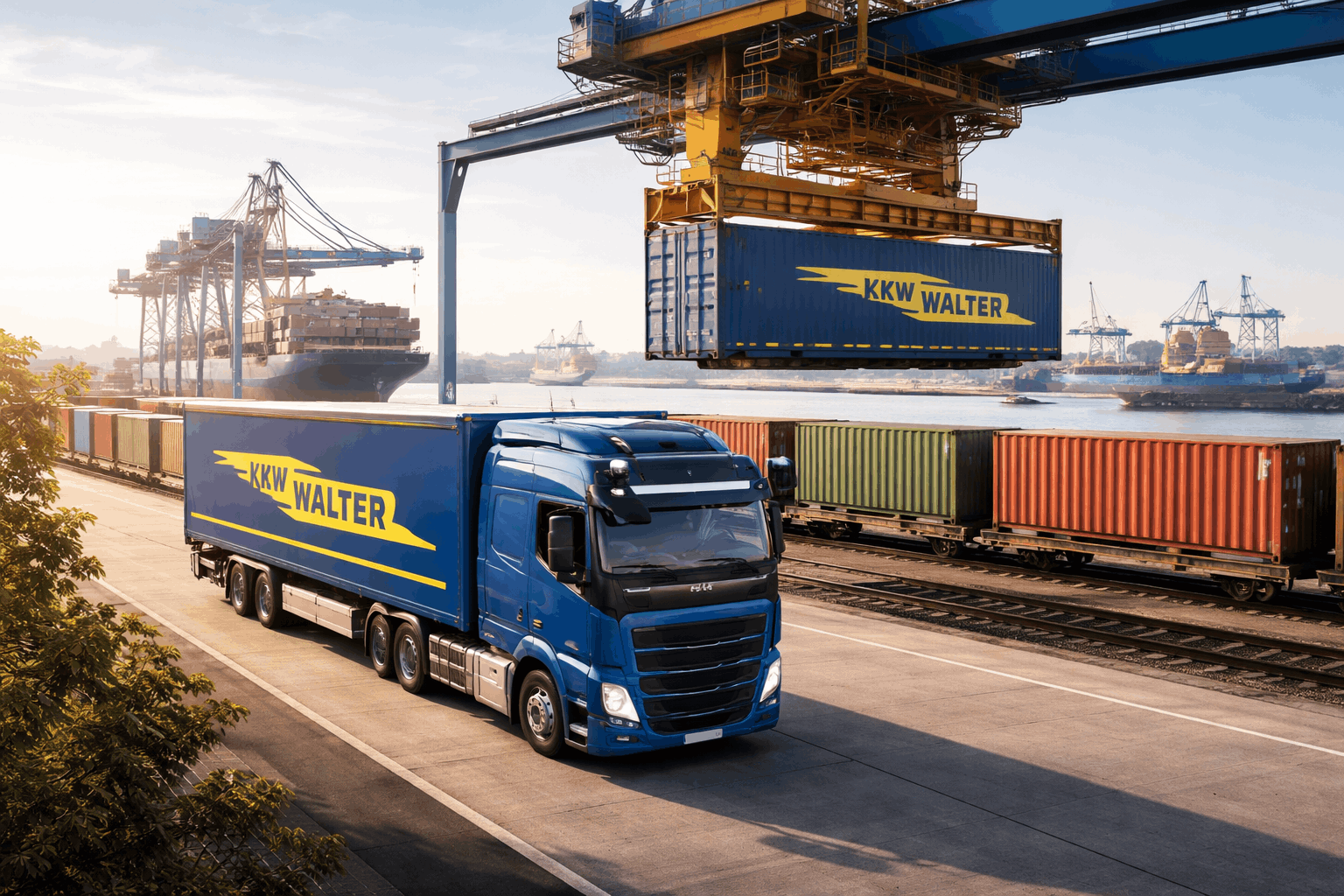
Main LKW Walter Logistics Transport Routes and Typical Corridors
LKW WALTER presents high-frequency cross-border movements between industrial regions, ports, and distribution hubs.
It also positions combined transport as a second “route layer” that uses rail and short-sea services to connect key markets.
Drivers often experience this as either classic point-to-point road FTL work or “first/last mile” legs that feed an intermodal rail or ferry segment.
Route patterns are usually shaped by shipper demand, terminal schedules, and compliance constraints rather than a single fixed map of lanes.
Core Europe lanes for FTL
Highlights Europe-wide FTL coverage, which generally implies frequent cross-border lanes among major business centres and logistics nodes.
You should expect assignments that can change week to week based on freight flows, customer seasonality, and dispatch planning.
A practical way to evaluate “routes” is to ask whether your work will be regional, international long-haul, or intermodal feeder.
Short Sea + Rail combined transport network
LKW WALTER states it operates more than 300 daily departures across more than 250 short-sea and rail routes in its combined transport network.
Routes are designed to span North–South and East–West flows where scheduled intermodal services are strong.
For drivers, this often shifts the job from pure long-distance road mileage to planned handovers at terminals and ports.
How Combined Transport Works in Practice
LKW WALTER’s combined transport model is built around using rail/road and short-sea services.
This setup can improve predictability on certain corridors because departures are scheduled, but it also introduces terminal processes.
The company has also published route-expansion news, which illustrates how the network evolves as new rail capacity comes online.
For carriers, combined transport often requires special trailer handling compatibility and clear process discipline at handover points.
Rail/Road “cranable trailer” operations
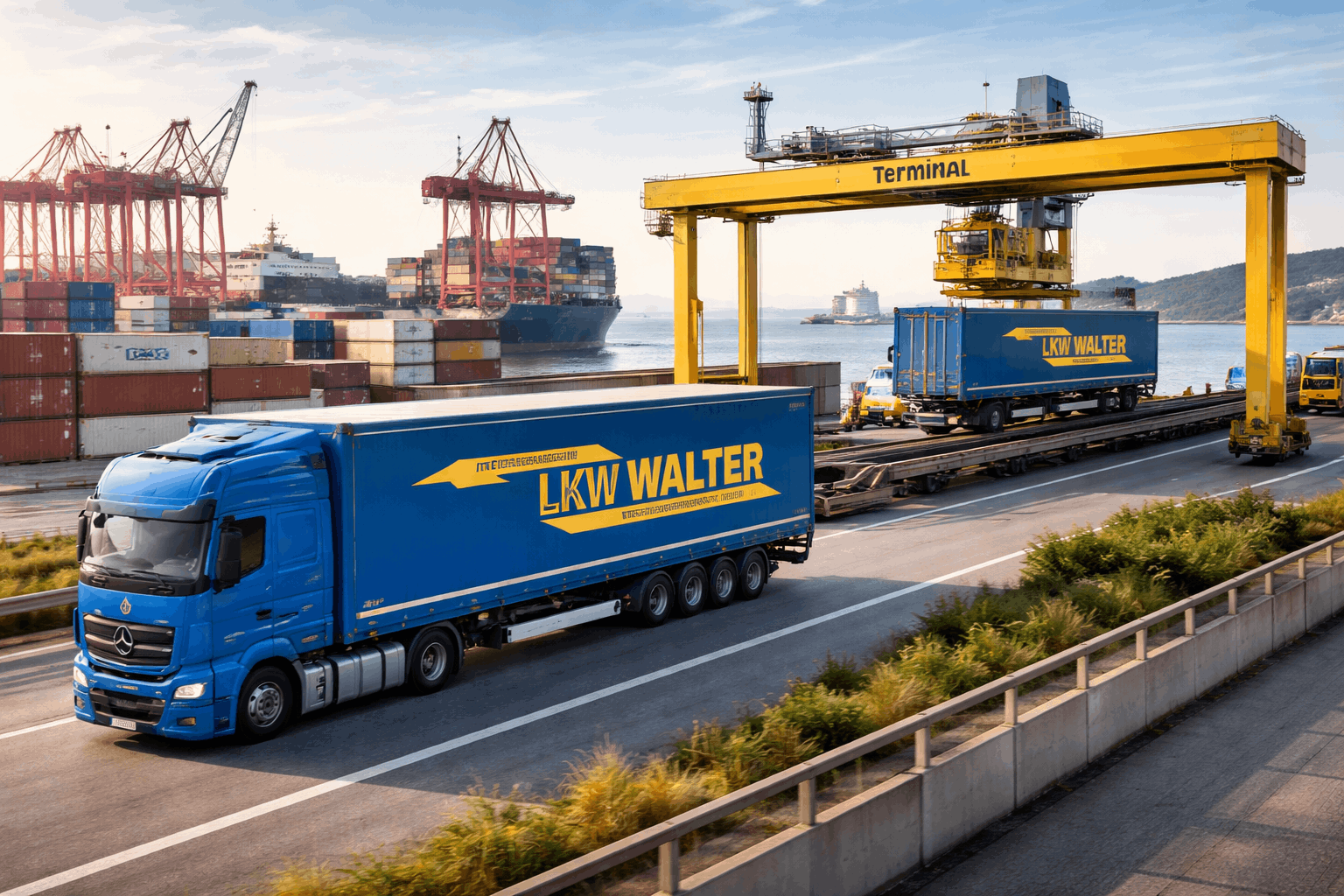
Cooperation with cranable trailers points to intermodal handling, where trailers are lifted onto rail wagons at terminals.
In these moves, drivers commonly complete a road leg to a terminal, follow site safety rules, manage documents correctly, and then pick up or drop off a unit.
Short Sea options and port-based flows
LKW WALTER groups short-sea services together with rail routes as part of its combined transport offering.
Short-sea work typically adds port procedures, check-in rules, and cut-off times that drivers must respect while keeping load security.
If you are evaluating this type of route, the key question is whether you are comfortable with structured handovers and schedules.
Driver and Carrier Requirements
Many “driver requirements” are delivered via the carrier’s obligations, equipment standards, and onboarding documentation.
Its carrier pages specify the vehicle types it works with and additional requirements for cooperation involving container trailers and intermodal operations.
An onboarding flow where partners must provide specific documents, such as IDs and insurance.
For drivers, this typically translates into being ready for PPE, document handling discipline, and operational standards.
Vehicle and equipment standards
LKW WALTER states that partner vehicles may include equipment types like jumbo road trains, box trailers, and frigo configurations.
Ot lists requirements such as a Euro 6 tractor unit, a telematics GPS, and personal protective equipment (PPE) for drivers.
These requirements align with intermodal realities because tracking, emissions rules, and on-site safety gear can be non-negotiable.
Documentation and onboarding checks
Required documents to prepare in scans or photos include an ID document for the managing director.
A stated minimum insured amount and higher coverage, plus an operator’s licence / EU licence, are part of onboarding.
Compliance, Safety, and Service Quality Expectations
LKW Walter logistics freight lives or dies on compliance.
LKW WALTER has been publicly associated with road-safety guidance that highlights pre-trip checks, safe driving, and correct loading/unloading processes.
For route work that touches terminals and ports, process accuracy becomes just as important as driving skill.
If you want to succeed, you should treat “driver requirements” as a blend of safe habits, paperwork discipline, and time-window reliability.
Road safety and operational discipline
Expectations across the trip cycle include checking papers, vehicle and equipment readiness, and PPE before a journey begins.
It also points to safe driving practices tied to fatigue and defensive driving, which is especially relevant on long international corridors.
For loading and unloading, it notes document handling, checkpoints, customs rules, load securing, and weight checks.
Sustainability and CO2 reduction focus
Its announcement of a Swedish rail connection explicitly links new rail services to a goal of significantly reducing CO₂ emissions in national transport.
For drivers and carriers, this usually means more assignments tied to intermodal nodes.
This reward punctuality, correct unit handling, and comfort with terminal procedures rather than only maximizing road miles.
Conclusion
If you are assessing LKW WALTER logistics, think in terms of two route “families,” namely classic road FTL and scheduled combined.
Driver readiness is shaped by partner standards like PPE, GPS/telematics expectations, and strict documentation and onboarding rules for carriers.
The strongest fit is usually drivers who are calm under time windows, consistent with paperwork, and comfortable with terminal routines.