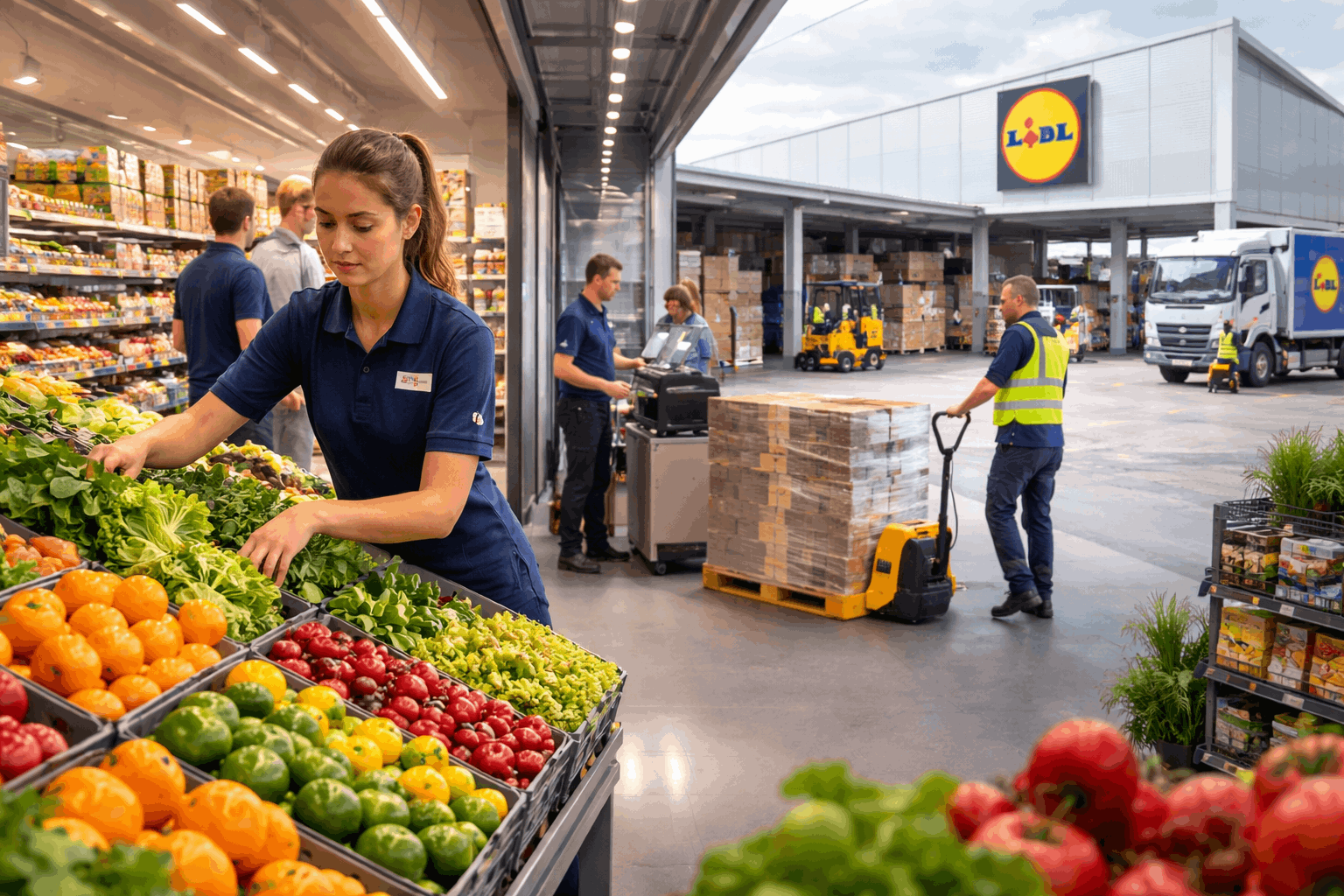
Lidl supermarket and distribution center roles are built around moving a limited, consistent range of products from suppliers to logistics sites.
Jb titles and exact duties can vary by market, but the core workflow is similar in most regions.
How Lidl Supermarket and Distribution Center Roles Connect
Lidl describes itself as operating thousands of stores supported by hundreds of logistics centers and warehouses.
This means most store teams focus on selling and stocking, while distribution teams focus on picking, staging, and shipping store-ready loads.
If you’re choosing a role, it helps to think of the system as two linked workplaces with different rhythms, skills, and physical demands.
Centralized Logistics Sites and Cross-Docking
Lidl’s logistics-site materials describe inbound locations that receive goods from suppliers and handle cross-dock activity to keep product flowing efficiently.
Those sites are positioned at major transport hubs, which support fast transfer from incoming loads to outbound movements.
For workers, this kind of setup often means structured processes, fixed scan-and-move routines, and strict timing windows to hit store delivery schedules.
Store Replenishment and Daily Stock Flow
A key objective is getting the right stock to stores when they need it, which is the basic promise behind distribution work.
Reflects a broad operations scope, including stocking shelves and even using equipment like pallet jacks in some markets.
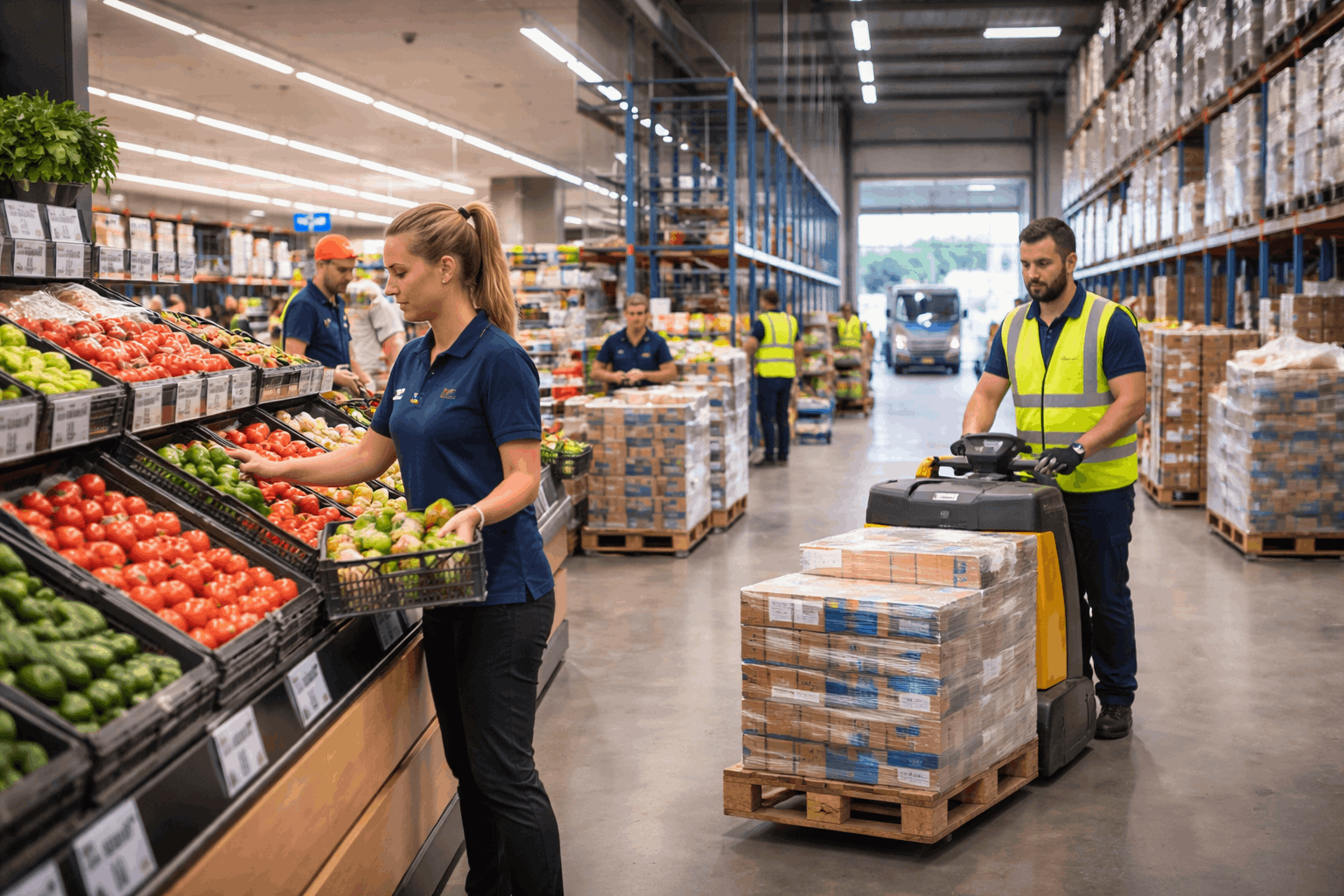
Logistics teams build accurate store loads, and store teams break them down into full, shopper-ready shelves.
Supermarket Roles That Keep Stores Running
Store operations roles are designed for speed, accuracy, and customer interaction, especially during peak hours and delivery breaks.
Combine register work, shelf replenishment, cleanliness, and basic equipment handling into one flexible role.
Because teams are often lean, you should expect frequent task-switching rather than staying in one station for an entire shift.
If you like active work with visible results and steady customer contact, store roles are usually the best match.
Customer Assistant or Store Associate
Emphasize being involved in many parts of store operations, from registers and stocking to operating a pallet jack in some cases.
Highlight practical standards like stock loss controls, hygiene, freshness rotation, waste handling, and helping with stock counts.
In plain terms, this role suits people who can stay organized while moving quickly, follow routines consistently, and communicate calmly with customers.
Shift Leader, Shift Manager, or Retail Shift Manager
A role focused on keeping shifts running smoothly and maintaining customer satisfaction through strong day-to-day leadership.
In many stores, this type of role fills in for higher management when needed and coordinates people, priorities, and standards during trading hours.
If you want growth, shift leadership can be a practical stepping stone because it adds responsibility for pacing, delegation, and operational follow-through.
Distribution Center Roles That Power Availability
Distribution-center work focuses less on customer interaction and more on accuracy, safe movement, and consistent output across the shift.
Lidl logistics job pages describe picking and loading as core activities, which directly affect whether stores receive complete orders.
These facilities often run extended hours, and some postings explicitly note 24-hour operations and rostered shift planning.
If you prefer measurable tasks and teamwork under clear procedures, distribution roles can feel more predictable than store work.
Warehouse Operative and Order Picking
Moving, picking, and loading food and non-food products while ensuring stock is received, stored, packed, and transported to high standards.
Working in both ambient and temperature-controlled areas, which can change the physical feel of the job from hour to hour.
Because picking is often order-driven, your performance is usually tied to accuracy, pace, and safe handling rather than customer service skills.
Facilities and Site Support
Maintaining stores, distribution centers, and offices, with responsibilities linked to maintenance, building safety, and energy efficiency.
This work is more about keeping critical systems running, coordinating budgets, and working with internal and external stakeholders.
If you have trade, engineering, or compliance experience, facilities can be an operations path that supports both store and logistics performance.
Standards, Safety, and Working Conditions
Both stores and warehouses rely on standard operating procedures so that quality looks consistent even when teams change, and shifts rotate.
Store-facing lean heavily on cleanliness, hygiene, and freshness rotation, while warehouse lean heavily on correct storage and correct movement.
Some distribution roles explicitly include temperature-controlled environments, which means comfort and PPE expectations can differ.
If you’re evaluating roles, comparing “customer pressure” versus “process pressure” is a useful way to predict what will feel stressful.
Store Hygiene, Freshness, and Loss Controls
Lidl store role descriptions call out cleanliness and hygiene standards, along with rotation principles that help manage freshness and reduce waste.
They also reference stock loss controls and correct waste management, which shows that accuracy and compliance matter even in entry-level store work.
If you dislike routine checks or detail-focused rules, store operations may feel stricter than you expect from a “simple cashier” job.
Warehouse Environments and Physical Demands
Warehouse operative pages describe end-to-end handling expectations, including receiving, storing, packing, and transporting stock.
They also note that work may span different product categories and environments, including temperature-controlled areas.
If you prefer staying active and working with clear targets, this setting can be motivating.
Training, Progression, and How Lidl Supermarket and Distribution Center Roles Connect
Lidl job pages often mention onboarding plans or structured learning, especially in logistics roles where process knowledge affects safety and accuracy.
Store roles also tend to be “learn by doing,” because the same associate may handle registers, stocking, and basic operational tasks within one week.
Over time, many operations careers move from task execution into shift leadership, process coordination, or site support functions like facilities.
The most realistic way to plan is to pick an entry point you can sustain, then build reliability and broaden skills before chasing titles.
Onboarding and Learning the System
Onboarding plans are designed to get new hires “up to speed,” which suggests a defined ramp-up period.
Even when training is informal, correctness matters immediately, because errors can affect stock availability, freshness, or safety.
A smart approach is to treat early weeks as skill-building time, focusing on procedure, pace control, and asking questions before habits harden.
Choosing the Right Role for Your Strengths
The store is best for people who like customer contact, fast switching between tasks, and visible daily wins like clean aisles and smooth checkout flow.
The distribution center is best for people who like structured processes, measurable output, and teamwork focused on accuracy and safe movement.
Facilities work is best for people who want an operations career rooted in maintenance, safety, and keeping sites functional over the long term.
Choose Lidl supermarket and distribution center roles on the kind of pressure you handle best: people-facing pressure or process-facing pressure.
Final Takeaway
Store roles fit people who like customer interaction, quick task-switching, and keeping the sales floor running smoothly.
Distribution center roles fit people who prefer structured processes, accuracy, and steady output that directly supports store availability.
Facilities and site support roles fit people who want technical responsibility and long-term operational impact across stores and logistics sites.