The Home Depot department roles hire behind-the-scenes operations, and leadership tracks that keep locations running smoothly.
Most openings fall into a few repeatable role families, so it helps to match your strengths to the right department before applying.
Hiring criteria can vary by role and location, but job postings and applicant guidance pages show several patterns you can prepare for ahead of time.
The Home Depot department roles you’ll see most often
Most store roles are designed around helping customers find products, complete purchases, and solve home-improvement problems in real time.
You’ll typically see departments grouped into front-end service, product-facing sales areas, and specialized support zones like tool rental or service desks.
Many positions are built to be entry-friendly, while still expecting reliability, safe work habits, and comfort in a busy retail environment.
If you pick a department that matches how you like to work, you’ll usually have an easier time during training and early shifts.
Front-end and checkout roles
Cashier work centers on processing checkout and returns while monitoring self-checkout areas for flow and basic support needs.
Even in a checkout role, you may lift items during the scan-and-pay process, so steady focus and safe handling still matter.
These jobs fit applicants who can stay calm under volume, follow procedures, and keep customer interactions friendly and efficient.
Sales-floor and customer help roles
Sales and customer service roles generally focus on guiding shoppers to the right products while keeping aisles shoppable.
Because the store sells project-based items, customers may ask for comparisons, measurements, and “best option” guidance that requires quick learning.
These roles often suit people who like conversations, can explain steps clearly, and don’t mind moving between product bays throughout a shift.
Merchandising and in-store presentation
MET/MEA roles support the customer experience through projects like planogram maintenance, display work, and in-store organization.
While heavy lifting may not be the core task, merchandising teams may still lift product as part of setting and maintaining displays.
This path fits detail-oriented workers who like structure, consistent routines, and visible “before and after” progress across aisles and bays.
Operations roles that keep the store stocked and moving
Operations teams handle product flow so shelves are ready for customers and high-traffic zones stay functional throughout the day.
These jobs can be more physical and task-driven, often involving trucks, pallets, and time-based routines that happen when the store is closed or quieter.
If you prefer hands-on work with fewer long customer conversations, store operations can be a strong fit with clear daily objectives.
Many operations roles also build practical skills that can transfer into specialty equipment training and step-up responsibilities over time.
Freight and receiving teams
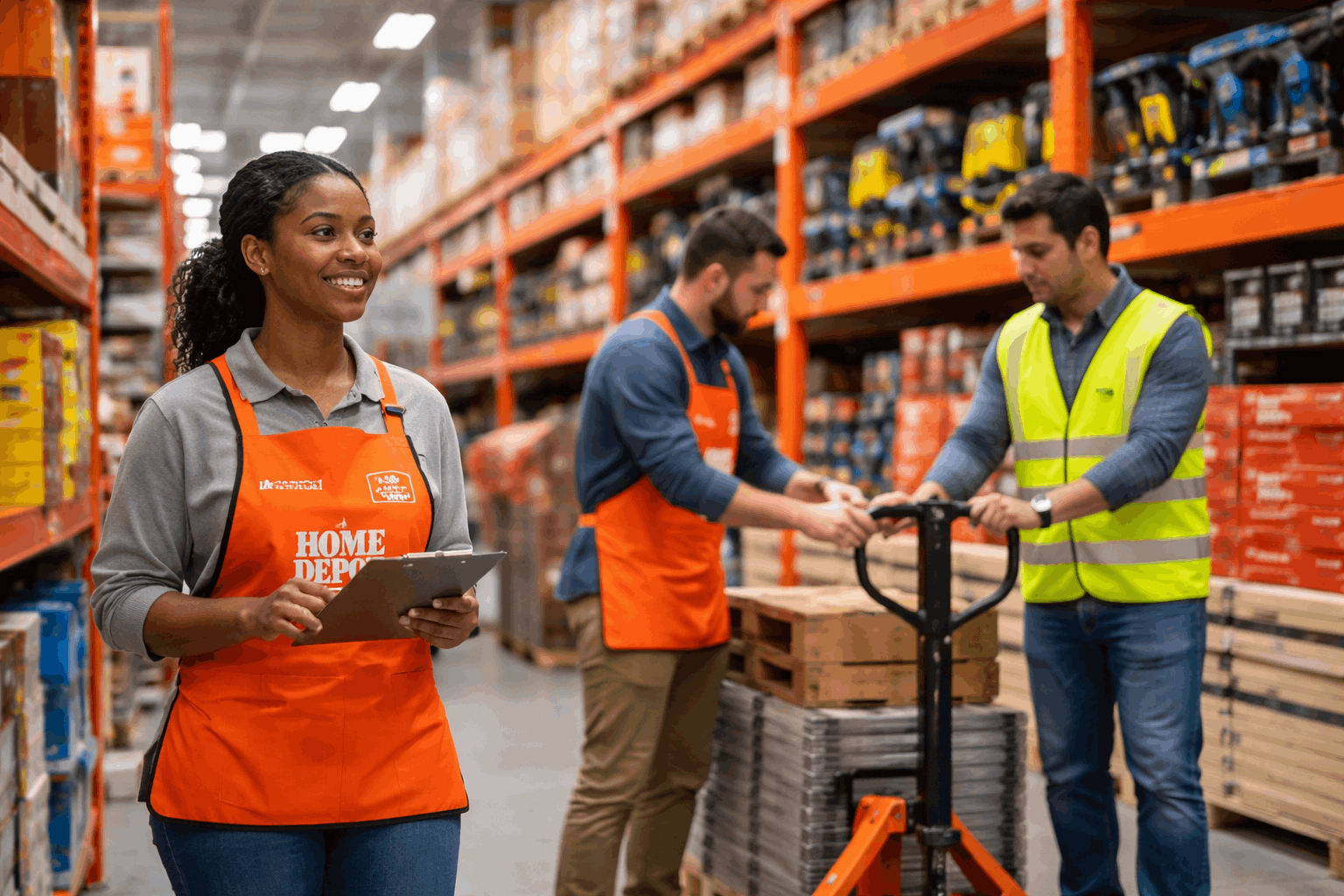
They help ensure the store is stocked by loading and unloading trucks, moving materials from receiving to the sales floor, and supporting inventory.
Overnight freight work includes unloading trucks and stocking aisles using conveyors and equipment like pallet jacks and forklifts.
These roles match people who can work at a steady pace, follow safe material-handling practices, and stay accurate when tasks repeat night after night.
Lot, loading, and curbside support
Assisting customers with loading vehicles, maintaining cart availability, and supporting the store entrance experience.
Because a lot of work can be outdoors and movement-heavy, comfort with changing weather and frequent walking can matter.
This department often works best for applicants who like active shifts, quick interactions, and clear performance targets.
Leadership tracks and department-level growth
Leadership roles exist in stores, distribution, and corporate teams, but many leaders start by mastering an hourly role and then stepping into supervision.
Hands-on experience, mentorship, and leadership development are part of preparing for responsibility across store operations.
Because leaders influence safety, customer experience, and task execution, hiring for these roles tends to look harder at experience and consistency.
If you want a leadership path, it helps to pick a department where you can show measurable results and reliability early.
Department supervision and management training roles
Some management postings explicitly frame the role as training for responsibilities, pairing structured learning with real-world oversight of teams.
That usually means performance is evaluated on execution quality, follow-through, and how well you support associates while maintaining standards.
Applicants who can communicate clearly, coach consistently, and manage shift priorities tend to fit these tracks better.
Hiring criteria that appear across many Home Depot postings
Applications are across hourly store roles and salaried or corporate roles, and it provides guidance for checking application status.
Some requirements are universal, while others are role-specific (for example, driving positions may have DOT-related requirements).
The most reliable way to confirm the criteria is to read the specific job posting for your location and job family before you submit.
Still, there are a few recurring items that can help you self-check eligibility and avoid wasting The Home Depot department roles applications.
Age and work authorization basics
Many postings include minimum qualification language such as “must be 18 years of age or older” and “must be legally permitted to work.”
Certain roles have higher age requirements, such as delivery-related postings that specify age 21+ along with licensing and record requirements.
Because eligibility can be location-dependent, using the official job listing and requirements section is the safest way to avoid guessing.
Assessments and accommodations during application
Online assessment includes 53 questions, focuses on professional experience and customer focus, and must be completed within a set time.
The company also provides a disability assistance channel for accommodations during the job search or application process.
If you expect to need accommodations, using the official support path early can reduce stress and keep the process moving without last-minute disruption.

How to apply with fewer mistakes and better role fit
The official careers site is the cleanest way to ensure you’re using current listings.
Check application status depending on whether you applied to hourly in-store/distribution roles or salaried/corporate-type roles.
A strong application is usually less about fancy wording and more about proving you match the job’s real daily tasks and schedule needs.
If you want faster momentum, apply to roles you can realistically start soon and that align with your availability and physical comfort level.
Build your application around the department’s actual work
For cashier roles, emphasize accurate transaction handling, comfort with returns or self-checkout monitoring, and customer-facing consistency.
For freight and receiving, highlight stocking, unloading, and safe material movement habits, since the work is tied to readiness and daily store flow.
For merchandising, focus on following standards, executing projects, and maintaining organized displays.
Prepare for the first weeks after you’re hired
Early success often comes down to learning procedures quickly, showing up reliably, and staying safe while you build speed and confidence.
If your role includes an online assessment, completing it carefully and on time matters.
Finally, keep your expectations anchored to the job posting details for your location.
Final Thoughts
The Home Depot department roles are many and suit different skills, work styles, and long-term goals.
Understanding how departments operate and what hiring criteria matter most helps applicants choose roles they can realistically succeed in.