Flexible work attracts people who want control over hours, routes, and income. The DoorDash Dasher role fits that goal, since scheduling happens inside the app and each offer can be accepted or declined based on distance, pay, and timing.
Most questions boil down to mechanics: how orders flow, how earnings are calculated, and what it takes to get started as a contractor. Solid answers start with the pay model, safety tools, and the exact requirements that unlock account approval.
What A DoorDash Dasher Actually Does
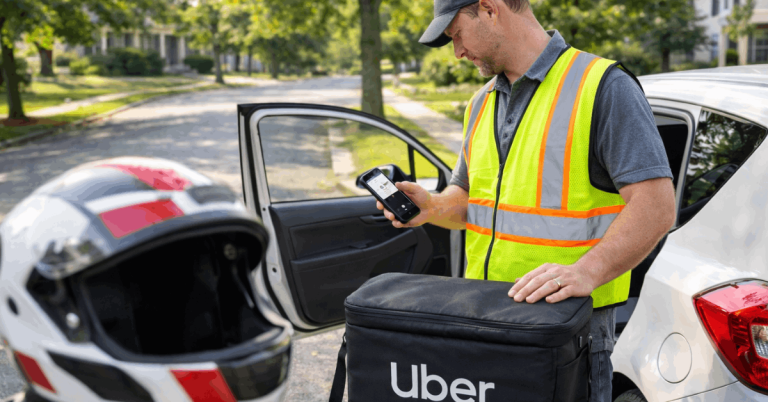
Dashers pick up orders from merchants and deliver to customers using a car, scooter, or bicycle where allowed. Work sessions open in the app, then hotspots show areas with demand.
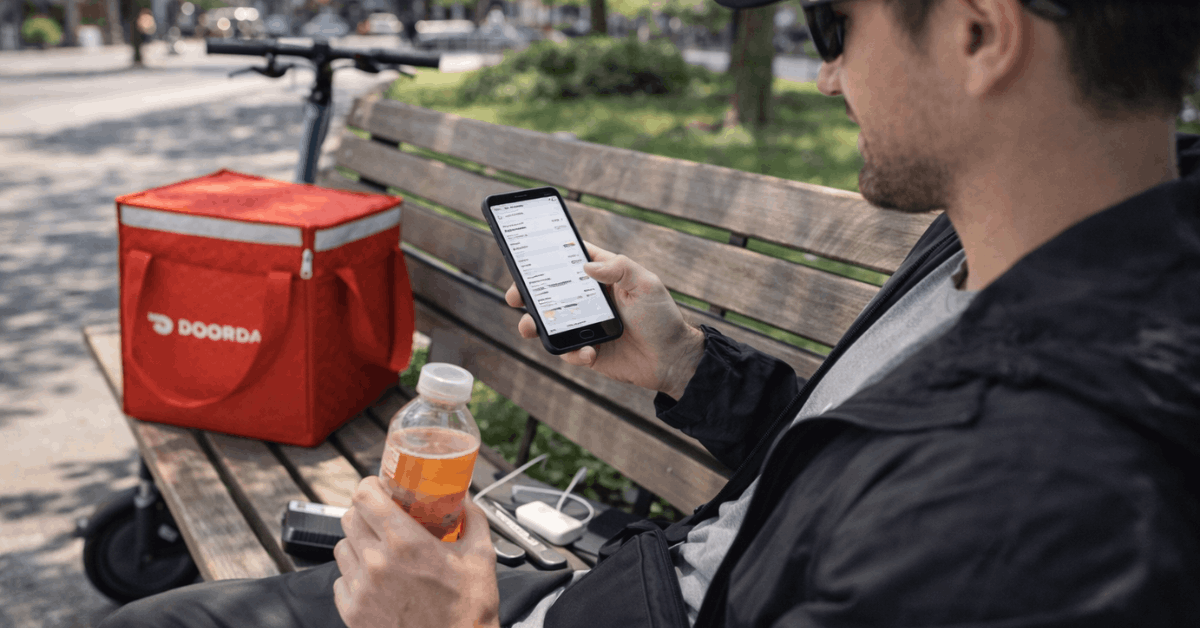
Offers surface one by one, each with upfront details such as estimated miles, pickup location, and pay type. Success rests on smart selection, clean handoffs, and consistent completion, not on perfect acceptance rates.
How The Platform Works For Dashers
A three-sided marketplace connects customers placing orders, merchants preparing items, and Dashers fulfilling last-mile delivery. Order routing considers distance, prep time, and the current supply of Dashers, which explains why short trips near busy restaurants produce steady offers during peak periods.
International operations run on the same foundation, whether the storefront sits in Dallas or on Wolt’s footprint in Helsinki.
Marketplace Basics
Order creation, merchant confirmation, and dispatch happen in seconds. The app tracks active time on each delivery, then logs completion results for earnings and program eligibility.
Regions differ on alcohol delivery, apartment access, and building security rules, so local prompts appear when special steps such as ID scans are required.
Order Flow
Expect a pickup time window, an estimated drive or ride distance, and clear drop-off notes.
Red Card orders appear occasionally when the platform authorizes you to pay at checkout; the app flags those and provides instructions. Cancellations and reassignments affect reliability metrics, so treat communication and proof photos as part of the job.
Regions and Availability
Coverage spans the United States, Canada, Australia, New Zealand, and dozens of international markets via Wolt and, more recently, Deliveroo.
Investor and press materials describe rapid expansion through acquisitions and partnerships, which is why availability and peak times vary widely by city and country.
According to AP News and company releases, DoorDash agreed to acquire Deliveroo in 2025 and completed the deal later that year, pushing operations past forty countries.
Pay Model Explained
Clear pay mechanics help you decide when to accept an offer and when to decline. DoorDash highlights three components that add up to total pay: Base Pay, Promotions, and Tips. Pay can be earned per offer or through Earn by Time, where available. Local earnings floors also apply in certain cities under regulation.
Base Pay
Base Pay is the platform’s contribution. When earning per offer, the estimate reflects distance, time, and desirability.
When earning by time, pay is based on a guaranteed hourly rate applied to active delivery minutes, plus 100 percent of customer tips. DoorDash documents the calculation and notes that the hourly option covers delays like traffic or backed-up kitchens.
Promotions
Peak Pay promotion and Challenges add on top when demand spikes or when completing a set number of deliveries. Promotions appear on the scheduling map or in the offer card; plan routes to stack short, efficient trips during those windows.
Tips
Customers tip in-app before or after delivery in most markets. Tips always pass through to Dashers in both per-offer and Earn by Time modes, according to DoorDash help content and product updates.
Requirements and Onboarding
A precise checklist keeps approvals smooth. Age rules vary by state in the U.S., documents must match, and the vehicle type must be supported in the city where you plan to dash.
Age Rules
Minimum age is 18 in many U.S. states. Several states require 19 for new applicants, and California requires 21 for new applicants. Official Dasher pages list Arizona, Colorado, Delaware, Florida, Georgia, Idaho, Kentucky, Montana, New Jersey, New Mexico, Texas, Utah, and West Virginia at 19, with California at 21.
International markets follow local law, so check the country-specific page when applying outside the U.S.
Vehicle Options
Any car, scooter, or bicycle may qualify where permitted. City rules determine which modes are active, and the app will show eligible options during signup. Clean insurance and a current registration are expected for motor vehicles based on local law.
Documentation
A driver’s license or government ID is required. A Social Security number is used for background screening in the U.S. to confirm contractor eligibility. Similar identity checks apply in other countries per local regulations.
Background Checks
Screenings are handled by third-party providers. Results are typically reviewed driving records and criminal databases, where allowed. Timelines can vary based on jurisdiction and the volume of applications.
Activation Kit and Gear
A Dasher activation kit ships after your first dash. Typical contents include a food warming bag and a Red Card for certain orders. An online store offers optional items for those who want extra gear or replacements.
Scheduling, Hotspots, and Promotions
Open the schedule to reserve time in busy zones, especially during lunch and dinner. Hotspots reflect recent order clusters rather than guaranteed earnings; treat them as a starting point, then adjust to actual offer patterns.
Promotions like Peak Pay promotion stack best in dense corridors with short parking and pickup time. Completion rate and on-time arrivals keep access to high-demand hours, so decline early when an offer does not fit your parameters rather than canceling after acceptance.
Safety and Support
Safety features sit inside the app for quick access. SafeDash includes an emergency assistance button and reassurance tools powered by ADT, along with real-time alerts that warn of incidents near the route.
DoorDash calls out free occupational accident coverage in certain regions and better incident reporting flows. A Safety FAQ and the public safety page summarize these options and explain availability by market.
Earnings Management and Payouts
Instant cashout matters for many Dashers. DoorDash Crimson Card enables same-day access to earnings for eligible Dashers with no fee within program limits stated in the Crimson Hub.
Rewards such as gas or cash back may apply with caps and conditions. Regional banking partners and specific terms vary by country and can change over time, so always read the current program details in the Earnings tab.
Strategy and Scale: Why Supply and Demand Feel Different Across Cities
Scale, category mix, and local rules explain why one market delivers constant offers while another feels lumpy.
Company filings and earnings updates point to strong growth through 2024 and 2025, with revenue up double digits and Marketplace Gross Order Value climbing year over year.
Q1 2025 materials reported revenue of roughly 3.0 billion dollars and GOV of about 23.1 billion dollars, with subsequent quarters continuing to expand.
Market Position Also Shapes Offer Flow
Third-party analytics and industry roundups consistently show DoorDash holding around two-thirds of the U.S. meal-delivery market in 2024. Numbers vary by source and month, yet the trend remains clear: DoorDash leads nationally, with Uber’s combined brands in second place.
Global Reach Widened in 2025
Company announcements confirmed the Deliveroo acquisition and continued integration of Wolt, pushing the footprint to forty or more countries and crossing ten billion lifetime orders across the combined platforms. That breadth supports better merchant density, which generally improves offer availability for Dashers in major cities.
Practical Tips To Keep Earnings Predictable
Short, consistent habits reduce cancellations and idle time.
- Prioritize compact routes during meal peaks, then accept offers that keep the car or bike moving between nearby merchants.
- Check the fine print on Earn by Time, since the guaranteed hourly rate applies to active delivery minutes, not total dash time.
- Use the acceptance button decisively; declining quickly beats canceling after acceptance when distance or access looks weak.
- Keep tools ready: a charged phone, an insulated bag, and a backup light for night handoffs.
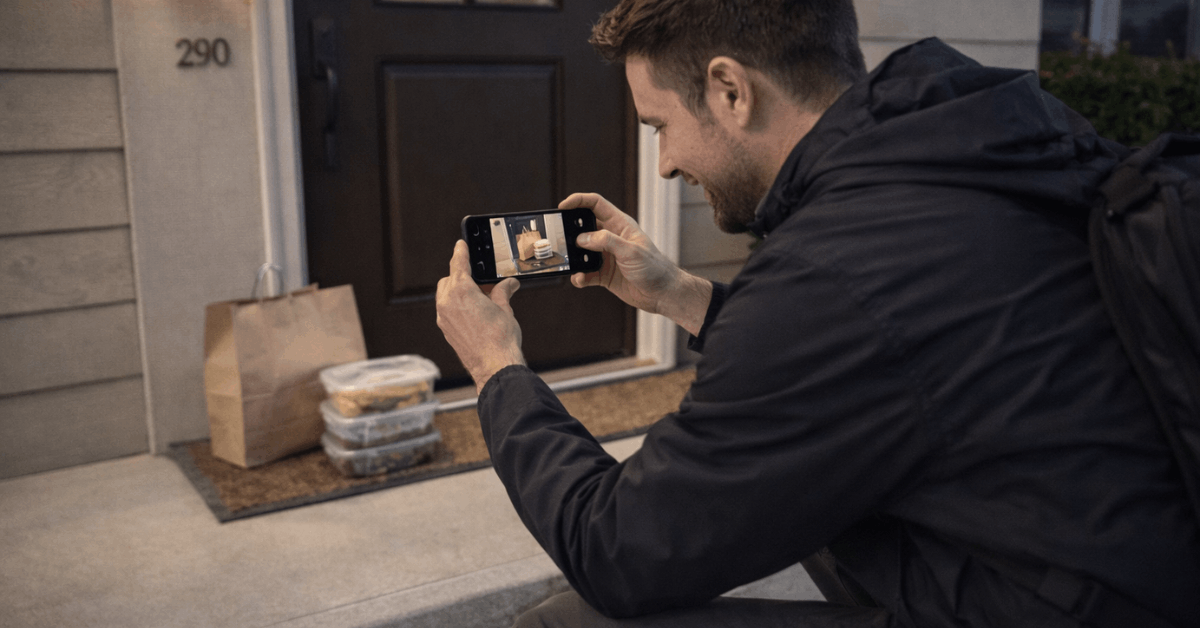
- Treat communication as part of the job: message on delays, add photos at drop-off, and log issues immediately in the app.
Local Regulations and Special Cases
Several cities apply earnings standards and transparency rules that change pay dynamics. New York City, for example, sets a minimum earnings rate per active hour for app couriers, separate from DoorDash’s own options.
Alcohol delivery introduces added steps such as dual ID verification in certain geographies, and some markets restrict vehicle types for dense urban cores. Read the market-specific page during signup, then recheck occasionally because policies evolve.
Last Thoughts
A solid Dasher finish looks simple: pick the right offers, keep safety tools close, and track results that prove reliability. Set clear rules for distance, access, and timing, then accept quickly when a card fits those rules.
Keep documents current, read the local requirements, and use Earn by Time only where it stabilizes pay. Treat each week like a small test, tighten habits that save minutes, and advance steadily as markets change.